
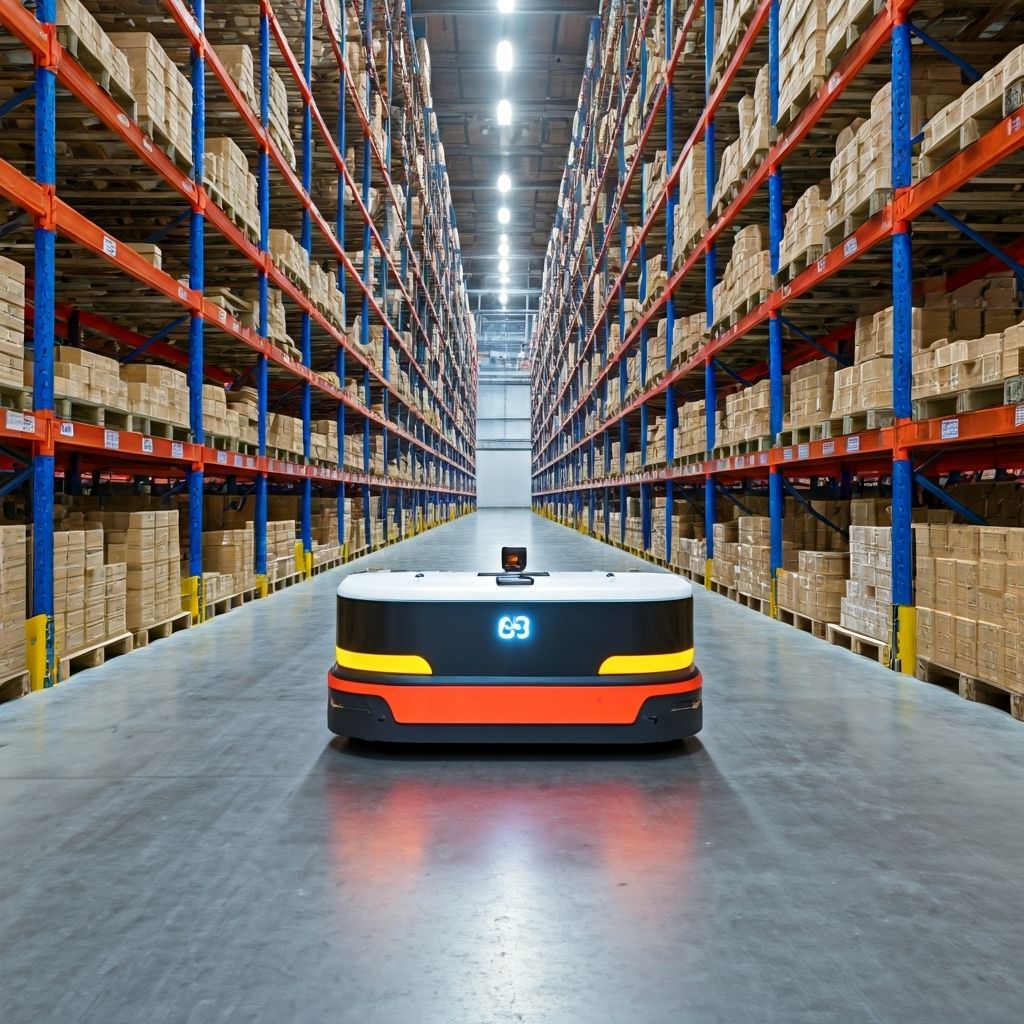
The logistics and warehousing industry is undergoing a major transformationin 2025. At the heart of this shift are Autonomous Mobile Robots (AMRs), intelligent machines designed to navigate warehouses, move goods, and optimize workflows. Unlike traditional automated systems, AMRs bring flexibility, adaptability, and efficiency—making them a game-changer for modern supply chain operations.
What Are Autonomous Mobile Robots?
Autonomous Mobile Robots are self-navigating vehicles that use LiDAR, computer vision, sensors, and AIto move safely in dynamic warehouse environments. Unlike Automated Guided Vehicles (AGVs), which rely on fixed paths or tracks, AMRs can adapt to layout changes, avoid obstacles, and collaborate with human workers.
Key Benefits of AMRs in Warehouses
- Improved Efficiency: AMRs reduce walking time for workers and speed up order fulfillment.
- Flexibility & Scalability: Easily deployed, reprogrammed, and scaled to match seasonal demands.
- Enhanced Safety: Built-in sensors prevent collisions and reduce workplace accidents.
- Cost Reduction: Lower operational costs by automating repetitive, labor-intensive tasks.
- Real-Time Data: Integration with warehouse management systems provides live inventory and workflow insights.
How AMRs Are Transforming Logistics
AMRs are reshaping the logistics sector by enabling faster order processing, optimized warehouse layouts, and smarter workforce collaboration. From e-commerce fulfillment centers to manufacturing plants, AMRs are reducing downtime, improving accuracy, and scaling operations to meet rising customer demands.
Real-World Applications of AMRs
- E-commerce Warehouses: Accelerating picking and packing operations.
- Manufacturing Plants: Moving raw materials and finished goods seamlessly.
- Retail Distribution Centers: Handling seasonal demand spikes efficiently.
- Pharmaceutical Storage: Transporting sensitive products with precision and security.
Challenges and Considerations
While AMRs offer significant benefits, companies must consider upfront investment costs, system integration, employee training, and regular maintenance. Proper planning ensures smooth adoption and maximizes ROI.
The Future of AMRs in Warehousing
As AI and robotics technologies advance, AMRs will become even more affordable, collaborative, and intelligent. Concepts like swarm robotics and hybrid human-robot teams are already emerging, promising unprecedented levels of efficiency in the warehouses of tomorrow.
Conclusion
Autonomous Mobile Robots are no longer futuristic—they are actively reshaping warehouses and logistics operations. By improving efficiency, safety, and scalability, AMRs give businesses a competitive advantage in an era where speed and accuracy matter most. Warehouses that adopt AMRs today are investing in a smarter, more resilient future.