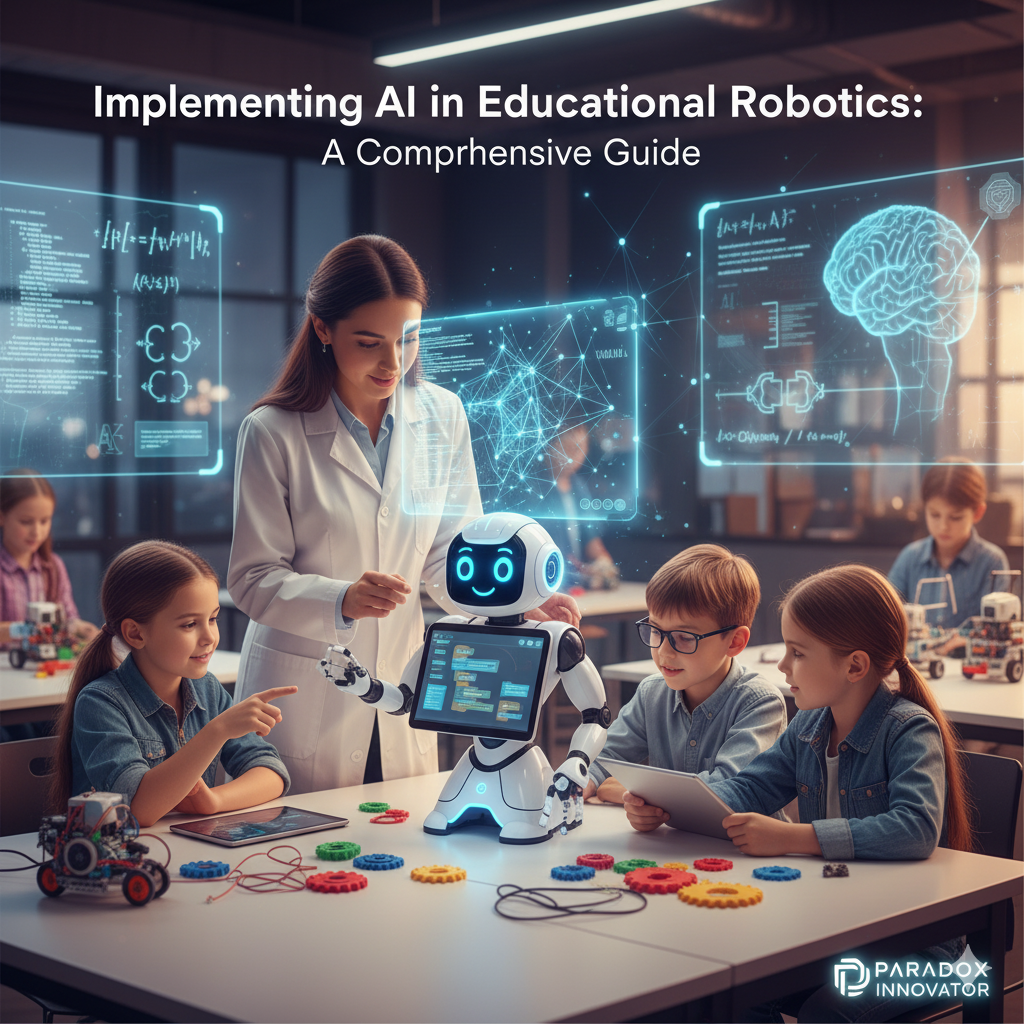
Artificial Intelligence (AI) is reshaping industries, and education is no exception. One of the most impactful areas is the integration of AI with educational robotics, enabling interactive, adaptive, and highly engaging STEM learning experiences.
The Rise of AI in Education
AI introduces personalized learning, instant feedback, and real-world simulation into classrooms. When paired with robotics, it transforms abstract STEM concepts into practical, hands-on activities, giving students the opportunity to learn by doing.
What Are Educational Robotics Platforms?
Educational robotics platforms are designed to teach coding, electronics, and problem-solving through building and programming robots. With AI, these systems become smarter, allowing robots to respond to voice commands, detect objects, and adapt their behavior based on student performance.
Key Benefits
- Personalized Learning: AI adapts tasks to each student’s pace.
- Hands-On Application: Learners apply theory in real-world robotics projects.
- Teamwork & Collaboration: Robotics fosters group problem-solving.
- Future Readiness: Students gain skills in AI, automation, and coding.
Real-World Examples
From AI tutors that guide students through coding exercises to smart robotics kits with vision and speech recognition, schools worldwide are implementing AI-driven robotics projects to make STEM education more interactive and relevant.
Challenges and Considerations
Despite its benefits, AI in educational robotics faces hurdles: high costs, teacher training requirements, and curriculum alignment. Addressing these is crucial for sustainable adoption.
Future Outlook
The future holds possibilities such as AI-powered teaching assistants, immersive robotics labs, and adaptive analytics to track student growth in real-time.
Conclusion
AI in educational robotics is more than just a trend—it is a shift in learning methodology. Schools and institutions that adopt it today will nurture future innovators prepared for an AI-driven world.